


Boundary Microphones for Conference Tables
A boundary microphone sits on the table surface and picks up the people around it. The choices that matter are the polar pattern, how many seats one microphone has to cover, and how it connects: an XLR output into a mixer or DSP, or a network array that does its own processing. This guide covers four boundary microphones from Shure and AKG and one Shure table array for rooms that outgrow them.
The 5 Picks
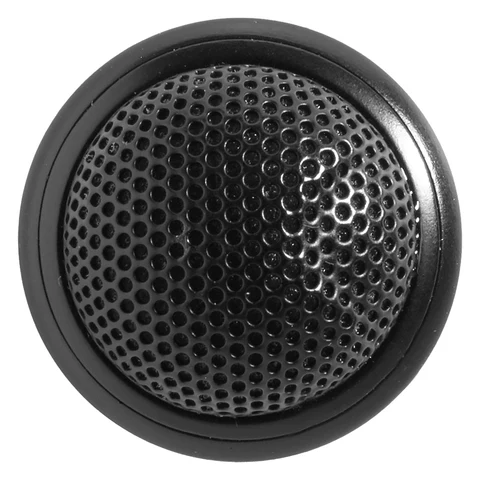
Specs
- Pattern
- Cardioid (omni and bidirectional versions also made)
- Notable
- Output: 3-pin XLR (5-pin on LED models); Diameter: 1.25 in (3.8 cm)
- Use it for
- A small-diameter cardioid for a table where the microphone should not stand out.
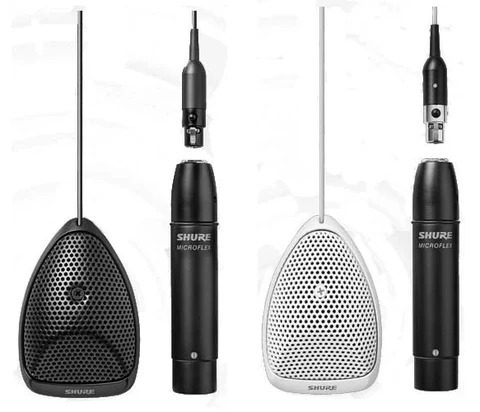
Specs
- Pattern
- Cardioid capsule; omni and supercardioid capsules are interchangeable
- Notable
- Cable: Attached 4 m (12 ft), 4-pin mini connector; Preamp: Separate preamplifier
- Use it for
- Boardroom, altar and distance-learning installs that need to change pattern by swapping the capsule.
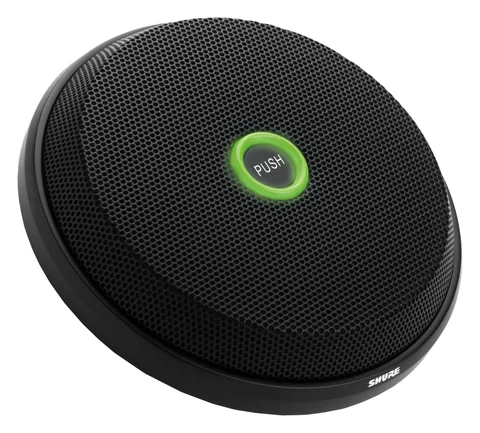
Specs
- Pattern
- Cardioid
- Notable
- Cable: 6.1 m (20 ft), attached, unterminated, three shielded audio pairs and three shielded conductors for logic control; Elements: Two or three element configurations; Coverage: End of table 300 degrees, center 360 degrees, or cross table bidirectional
- Use it for
- A multi-element microphone with end-of-table, center-of-table and cross-table coverage options. Multiple elements let one microphone cover more seats.
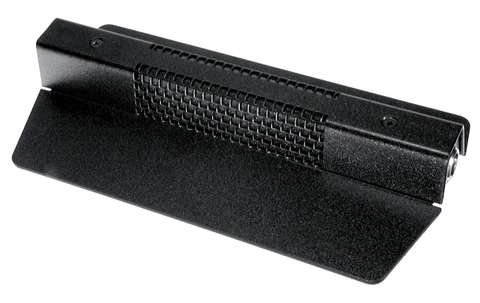
Specs
- Pattern
- Supercardioid
- Notable
- Output: 3-pin Switchcraft TA3F; the cable ends in an XLR-style plug; Power: 12 to 48 V phantom; Use: Conference room tables
- Use it for
- A phantom-powered supercardioid for a mixer or DSP input that supplies phantom power.
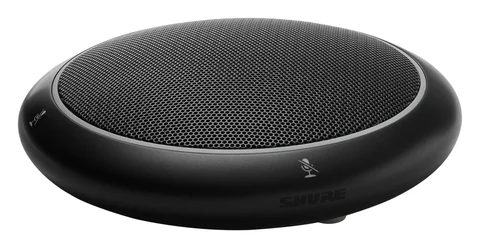
Specs
- Notable
- Coverage: Steerable, set in Designer software; Network: Dante and PoE on one Ethernet cable; DSP: Echo cancellation, noise reduction
- Use it for
- A table array for a room where a boundary microphone per seat is impractical.
What Matters
Shure lists the MX391 with interchangeable cardioid, omnidirectional and supercardioid capsules. The MX395 comes in cardioid, omni and bidirectional versions. AKG lists the PCC160 as supercardioid, which it says improves gain before feedback and reduces room noise from the rear. Pattern matters because it sets what the mic hears and what it rejects.
Shure builds the MX396 in two or three element configurations, with end-of-table (300 degrees), center-of-table (360 degrees) or cross-table (bidirectional) coverage. A 360 degree center element hears people all around it, while an end-of-table element suits a mic placed at one end.
The MX395 lists 3-pin and 5-pin XLR outputs, and its -LED versions add a bi-color status indicator with a logic input for remote control. The MX391 has an attached 4 meter (12 ft) cable ending in a 4-pin mini connector, with a separate preamplifier. AKG says the PCC160 takes 12 to 48 V phantom power. Connection decides what the mic plugs into: the cable needs a mixer or DSP input, and the PCC160 needs that input to supply phantom power.
The MX395 is 1.25 inch (3.8 cm) in diameter. Shure describes the MX391 as a low-profile design for boardrooms, altars and distance learning centers. A small mic matters on a table because it takes less room and draws less attention.
The MXA320 is a table array: Shure lists steerable coverage set in Designer software, Dante, PoE on one Ethernet cable, and onboard echo cancellation and noise reduction. It suits a room that needs that processing; it does not use an XLR output. Steering the coverage in software means seats are covered without a microphone at each one.
Questions
The Shure MX395 lists 3-pin and 5-pin XLR outputs. The MX391 uses an attached cable with a 4-pin mini connector and a separate preamplifier. An XLR output plugs straight into a mixer or DSP input.
The MX395 comes in cardioid, omni and bidirectional versions, and the MX391 takes cardioid, omni or supercardioid capsules. The MX396 is cardioid and the AKG PCC160 supercardioid. A tighter pattern rejects more of the room, while an omni takes in everyone around it.
The AKG PCC160 runs on 12 to 48 V phantom power. The mixer or DSP input it connects to must supply that power.
Questions? Talk to a Person.
Call (201) 791-1400 or email [email protected] - we've handled pro audio & video since 1988.