


Decimator Converters and Multiviewers: Which One Does the Job
Decimator makes two kinds of small box. A converter takes one HDMI or SDI signal and turns it into the other, and the cross converters also change its format and frame rate. A multiviewer puts several SDI sources on one HDMI or SDI screen, with labels, audio meters and tally around each window.
The 6 Picks
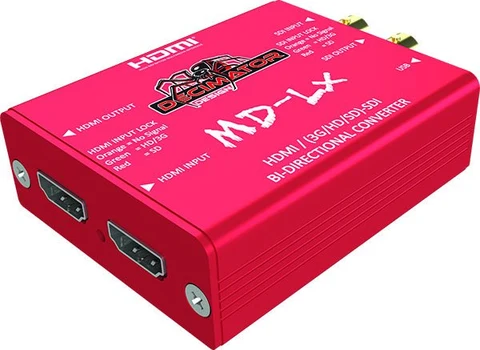
Specs
- Inputs
- HDMI and 3G-SDI
- Outputs
- HDMI and SDI
- Top format
- 3G-SDI
- Scaling
- No scaling listed
- Use it for
- HDMI to SDI and SDI to HDMI at the same time, powered and controlled over USB, so no separate power supply is needed.
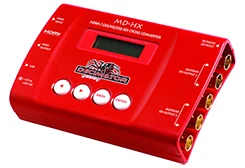
Specs
- Inputs
- HDMI (incl. VESA) and 3G-SDI
- Outputs
- HDMI and SDI
- Top format
- 3G-SDI, 2K
- Scaling
- 2K scaling and frame rate conversion (serials CLD, CLE, CLF)
- Use it for
- Format and frame-rate conversion in HD, with 41 output formats, test patterns and audio meter, UMD and graticule overlays, for when the source and destination formats or frame rates differ.
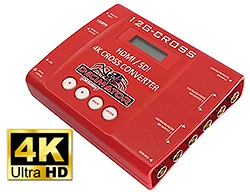
Specs
- Inputs
- HDMI (incl. VESA) and 12G-SDI
- Outputs
- HDMI and SDI
- Top format
- 12G-SDI
- Scaling
- 4K scaling and frame rate conversion
- Use it for
- 4K cross conversion between 351 input and 57 output formats, lockable to SDI, HDMI or genlock, for when the source or display is 4K and the other end is not.
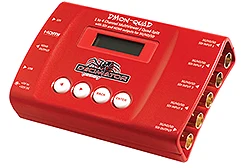
Specs
- Inputs
- 4 x 3G/HD/SD-SDI
- Outputs
- Linked SDI and HDMI
- Top format
- 3G-SDI
- Use it for
- A quad split, or four SDI-to-HDMI converters in one box, with UMDs, 8-channel meters and tallies, so one display shows every camera.
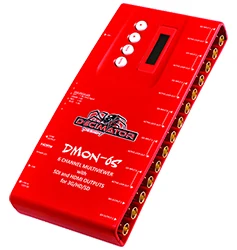
Specs
- Inputs
- 6 x 3G/HD/SD-SDI, each with a loop copy
- Outputs
- SDI and HDMI
- Top format
- 3G-SDI
- Use it for
- Six cameras on one screen, with 16-channel audio meters and safe-area overlays per window, so an operator can watch every camera and its levels at once.
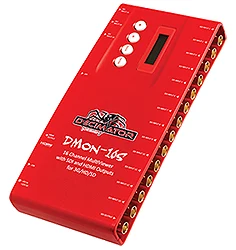
Specs
- Inputs
- 16 x 3G/HD/SD-SDI
- Outputs
- SDI and HDMI
- Top format
- 3G-SDI
- Use it for
- Up to 16 sources on one monitor in custom layouts, or a 16 to 1 input multiplexer, so a large production needs one monitor instead of many.
What Matters
The MD-LX converts HDMI to SDI and SDI to HDMI, both directions at once, with USB for power and control. The MD-HX and 12G-CROSS add a motion adaptive scaling engine that changes resolution and frame rate on the way through. The MD-HX 2K scaling engine is on units with serials starting CLD, CLE or CLF; older units have the earlier motion adaptive scaling. Cross conversion is needed when source and destination do not share a format or frame rate; a straight converter only changes the connector.
MD-LX and MD-HX work in 3G, HD and SD. The 12G-CROSS handles 12G, 6G and 3G-SDI, with 4096 or 3840 x 2160 at up to 60p accepted as an input format over HDMI or 12G-SDI. Choose by the highest-resolution source you will connect.
DMON-QUAD shows up to 4 SDI inputs, DMON-6S up to 6 and DMON-16S up to 16, each in custom layouts, and each can switch one input to full screen. More inputs per screen means fewer monitors to watch.
All three multiviewers put a 16-character UMD label, audio meters and up to 4 tallies on each window. DMON-6S and DMON-16S add safe action, safe title and centre cross overlays; DMON-6S meters 16 audio channels per window, the others 8. Tallies show which camera is live and meters show whether its audio is present.
Questions
It converts between HDMI and SDI and runs either input through a 2K motion adaptive scaling engine, so it can change resolution and frame rate when a source and a monitor disagree. It has 41 selectable output formats, 58 test patterns and overlays for audio meters, UMDs, format status and graticules.
The MD-LX converts HDMI and SDI both ways at the same format, which is all most connections need. The MD-HX adds scaling and frame rate conversion, test patterns and overlays.
Four. It takes 4 x 3G/HD/SD-SDI inputs, each in any format and frame rate, and shows them in custom layouts on linked SDI and HDMI outputs, so a four-camera shoot can be watched on one monitor.
Questions? Talk to a Person.
Call (201) 791-1400 or email [email protected] - we've handled pro audio & video since 1988.