


Shure SM63 and Other Interview Microphones: Which One to Buy
A reporter or presenter mic is held at arm's length, swapped between speakers and taken outdoors, so handling noise, wind and length matter more than they do on a stand. The Shure SM63 comes in three versions that differ only in length and color. The VP64A, RE50/B, MD 42 and MD 46 do the same job with a different pickup pattern, length or sound. For a presenter seated at a table, a boundary mic does the work without a hand on it.
The 6 Picks
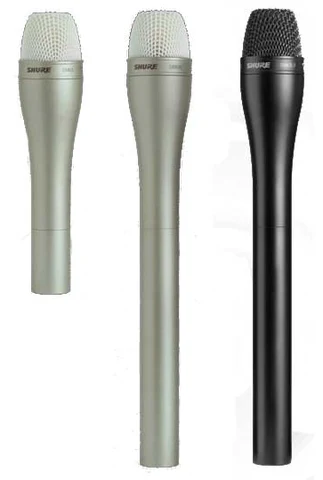
Specs
- Pattern
- Omnidirectional
- Type
- Dynamic
- Frequency response
- 80 to 20,000 Hz
- Use it for
- Handheld use on stage and in broadcast, recording and TV studios, because Shure designs it for that job. The page also sells the longer SM63L and SM63LB for remote interviews.
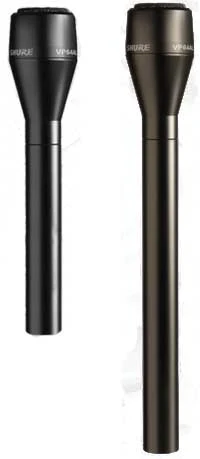
Specs
- Pattern
- Omnidirectional
- Type
- Dynamic
- Frequency response
- 50 to 12,000 Hz
- Notable
- Length: 200 mm
- Use it for
- Close-up speech indoors or outside, with a midrange presence rise that helps speech cut through. The VP64AL is the same mic at 244 mm.
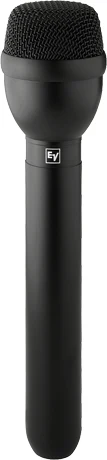
Specs
- Pattern
- Omnidirectional
- Type
- Dynamic
- Frequency response
- 80 to 13,000 Hz
- Notable
- Finish: Semi-gloss black
- Use it for
- Press scrums, sideline reports and on-camera standups. The element is shock-mounted, which keeps handling, clothing and cable noise out of a mic that gets moved constantly.
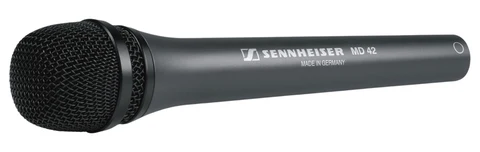
Specs
- Pattern
- Omnidirectional
- Type
- Dynamic
- Frequency response
- 40 to 18,000 Hz
- Notable
- Weight: 360 g
- Use it for
- Interviews where you do not want to point the mic at each speaker, since it is omnidirectional. Two-ply basket against wind and pops, rubber-mounted capsule.
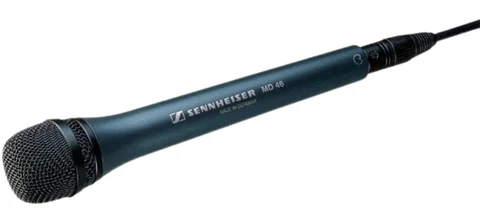
Specs
- Pattern
- Cardioid
- Type
- Dynamic
- Frequency response
- 40 to 18,000 Hz
- Notable
- Weight: 360 g
- Use it for
- Interviews in noisy places: the cardioid pattern favors the speaker and picks up less background noise, because it rejects sound from the sides and rear.
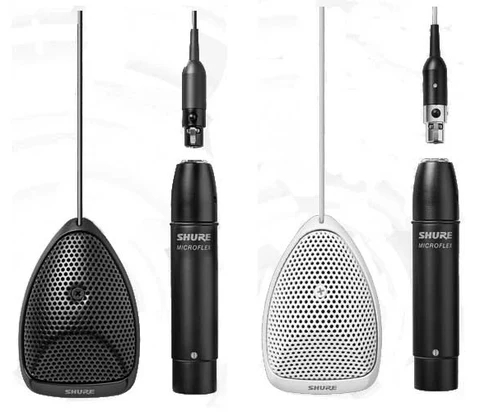
Specs
- Pattern
- Omnidirectional
- Type
- Condenser
- Use it for
- A presenter or panel seated at a table, with the mic lying flat in front of them so nobody has to hold it. It has an attached 4 m cable and a separate preamp.
What Matters
The shortest of the three. Shure designs it for handheld use on stage and in broadcast, recording and TV studios, where a short handle is easy to hold and pass between speakers.
Remote interviews, where the longer handle lets you reach the mic toward the person talking without leaning in. Both come with a windscreen, which cuts wind noise outdoors.
An omnidirectional mic (SM63, VP64A, RE50/B, MD 42) picks up the same on or off axis, so you do not have to point it exactly at each speaker, which speeds up a passed-around interview. The cardioid MD 46 focuses on the person in front of it and picks up less of the crowd around them.
Wind and rain are what ruin outdoor speech, so the mic needs its own protection. The RE50/B has a four-stage pop filter against wind, plosives and dust. The VP64A has a water-resistant mesh grille and comes with a windscreen.
A boundary mic lies flat on the table, so the presenter has nothing to hold. The Shure MX391/O is the omnidirectional version, with an attached cable and a separate preamp.
Questions
It is an omnidirectional dynamic mic tuned for speech, with a low-frequency rolloff and a built-in shock mount to cut handling and stand noise, which matters for a mic that is held. Shure designs the SM63 for handheld use on stage and in broadcast, recording and TV studios, and the longer SM63L and SM63LB for remote interviews.
Only length and color, so the sound stays the same and you choose by how far you need to reach. The SM63L and SM63LB are the longer versions, and both come with a windscreen for outdoor use.
The MX391/O lies flat on the table and picks up in all directions, so a presenter can move a little without leaving the pickup. It is a condenser mic with a 4 m attached cable and a separate preamp.
Questions? Talk to a Person.
Call (201) 791-1400 or email [email protected] - we've handled pro audio & video since 1988.