


Podcast Equipment: Choosing a Console, Microphone and Boom Arm
A podcast setup comes down to how many people talk at once, whether you record to a computer or to a card, and how guests join. A console takes the microphones, mixes them, records and handles remote callers. A USB or XLR microphone on a boom arm is the smaller version of the same job.
The 5 Picks
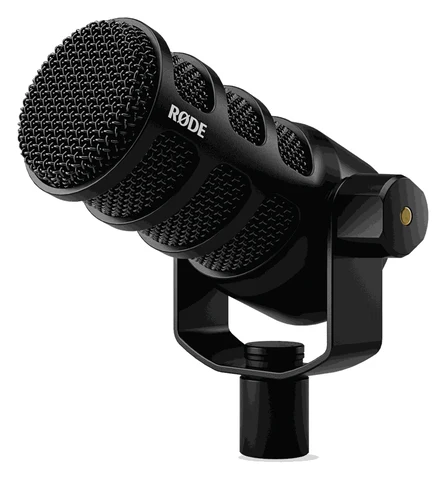
Specs
- Notable
- Connection: USB-C and analog XLR; Monitoring: Headphone output, near-instant; Processing: On-board APHEX DSP
- Use it for
- A solo host who wants one dynamic microphone that records straight to a computer over USB-C.
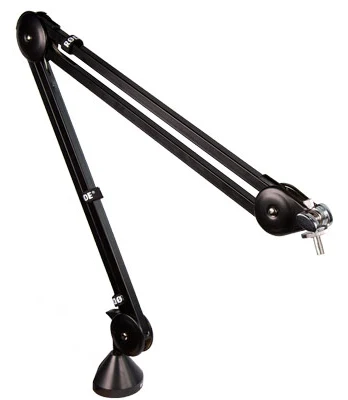
Specs
- Notable
- Holds: 94 g to 1.2 kg; Mount: Desk clamp and threaded mount; Cables: Built-in USB and XLR routing
- Use it for
- Keeps the microphone at the mouth and off the desk, for any mic on a standard thread.
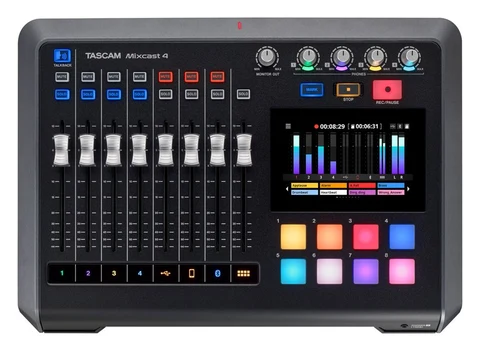
Specs
- Mic inputs
- 4, with auto-mix
- Headphone outputs
- 4
- Recording
- SD, SDHC, SDXC card
- Notable
- USB: 14-in, 2-out audio interface
- Use it for
- A four-seat table that records to a card, with mix-minus for call-in guests. The card slot means no computer is needed.
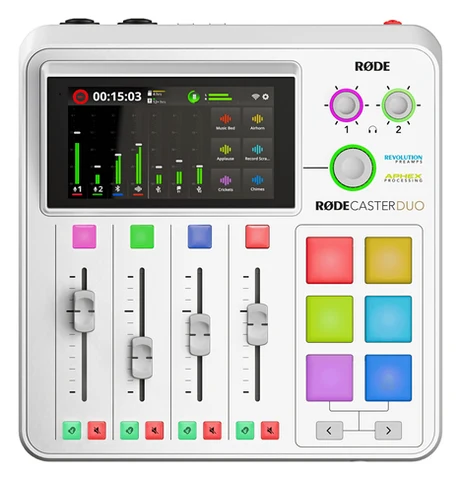
Specs
- Mic inputs
- 2 combo
- Headphone outputs
- 2
- Recording
- microSD, USB storage or computer
- Notable
- Pads: 6 SMART pads
- Use it for
- A host and one guest, with the same Rode processing as the larger console. Two combo inputs cover exactly two people.
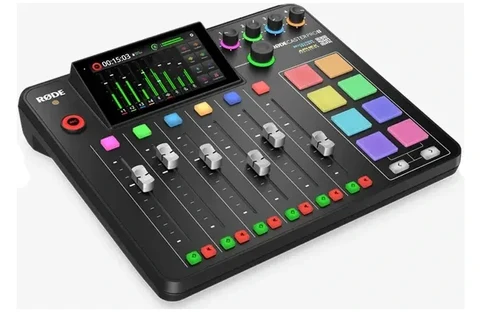
Specs
- Mic inputs
- 4 combo
- Headphone outputs
- 4
- Recording
- microSD, USB storage or computer
- Notable
- Pads: 8 SMART pads
- Use it for
- A four-seat table that needs the most pads and the longest pad bank, since more pads put more sounds on hand during a show.
Browse the Shelf
What Matters
The RODECaster Duo has two combo inputs and two headphone outputs. The Tascam MixCast 4 and RODECaster Pro II each have four mic inputs and four headphone outputs, so a host and three guests each get their own mic and monitor mix. Each seat needs its own input and headphone feed, so match the counts to your table.
The MixCast 4 records to SD, SDHC and SDXC cards and also works as a 14-in, 2-out USB audio interface. The RODECaster Duo and Pro II record multitrack or stereo to a microSD card, a USB storage device or a computer. A card records without a computer, while a computer suits editing straight after.
The MixCast 4 offers mix-minus for call-ins over Bluetooth, USB or a 4-pole TRRS cable, so a caller does not hear their own voice back. The RODECaster Duo and Pro II list Bluetooth for phone call integration and dual USB-C ports for two computers or mobile devices.
The Duo has six programmable SMART pads and the Pro II has eight, both with bank switching and APHEX processing on board. The MixCast 4 has sound pads for triggering effects, and its page does not give a pad count. Pads fire sounds at a button press, so more pads put more effects on hand live.
One host who records to a computer can skip the console. The PodMic USB connects over USB-C or analog XLR, with a headphone output and near-instant monitoring, so it works alone now and plugs into a console later.
Questions
A microphone, headphones and a way to record. A single USB microphone such as the PodMic USB records straight to a computer. With two or more people at the table, a console takes the place of the computer as the mixer, because it gives each person a mic input and a headphone feed.
Yes. It records to SD, SDHC and SDXC cards, and it also works as a 14-in, 2-out USB audio interface. The card is the recording, so no computer is needed.
The MixCast 4 has mix-minus for call-ins over Bluetooth, USB or a 4-pole TRRS cable. The RODECaster Duo and Pro II list Bluetooth for phone call integration. Mix-minus is what stops the caller hearing their own voice back.
Yes. It has both analog XLR and digital USB-C connections. USB-C goes straight to a computer and XLR to a console input.
Questions? Talk to a Person.
Call (201) 791-1400 or email [email protected] - we've handled pro audio & video since 1988.