


Sennheiser EM 6000 Digital 6000 Receiver
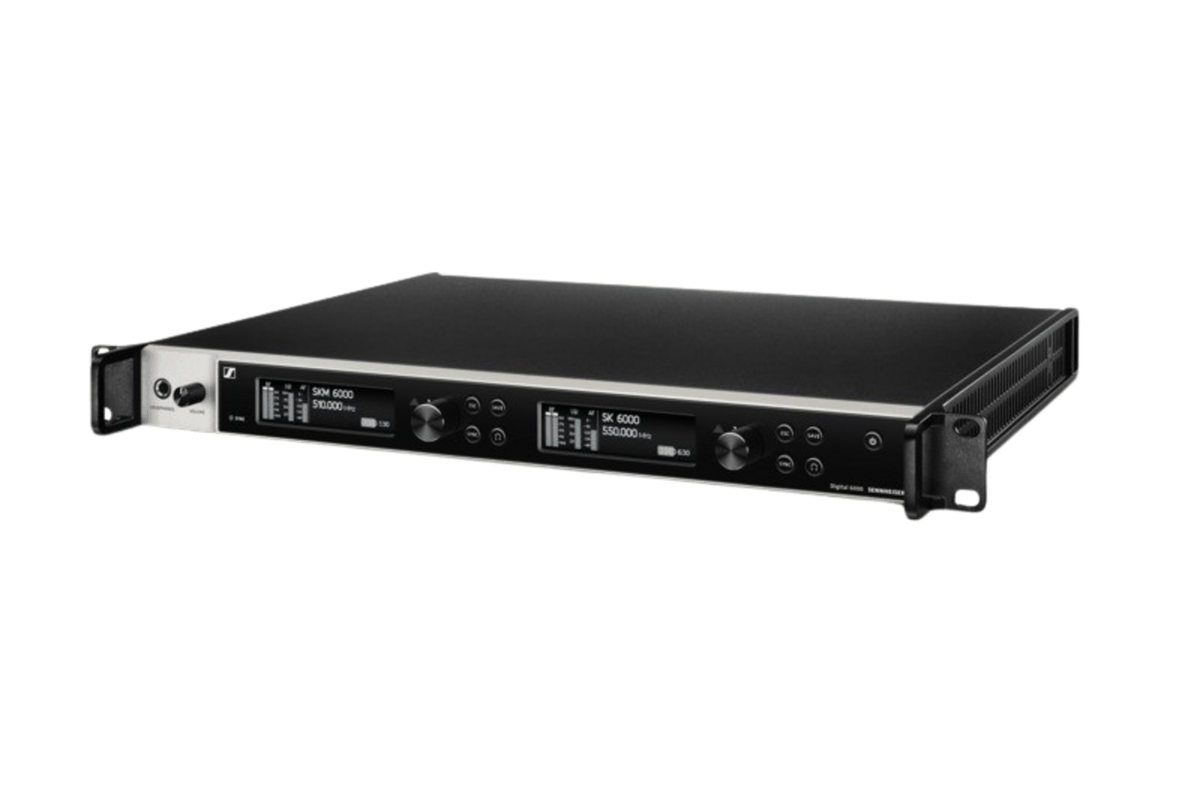
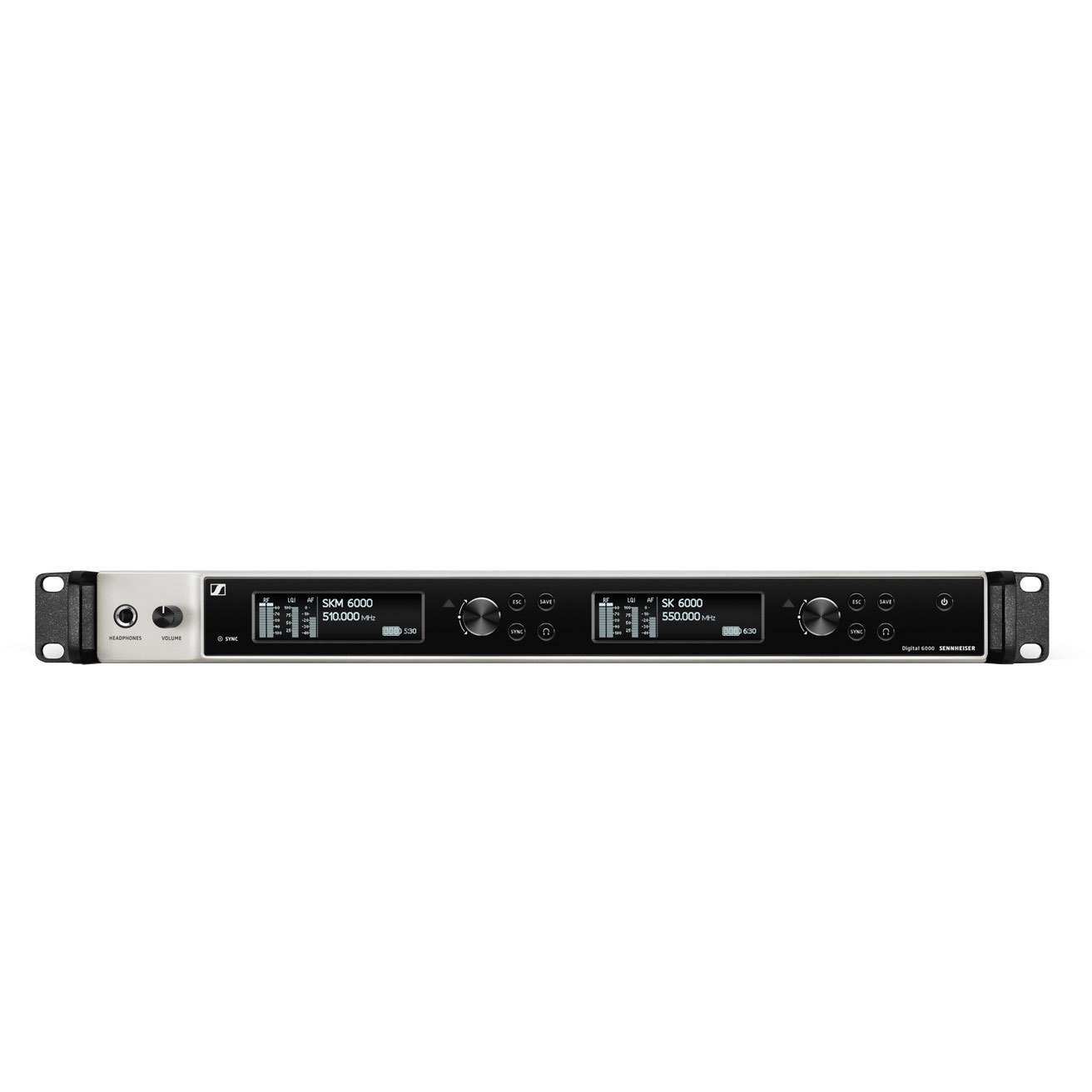
The EM 6000 is Sennheiser's 1RU, two-channel Digital 6000 receiver, built as the rack-mount backbone for touring and broadcast productions running large numbers of wireless channels in the same venue. An equidistant frequency grid simplifies setup across many channels, and 32 RF pre-selection filters cut down interference in an RF-dense environment like a stadium or convention center.
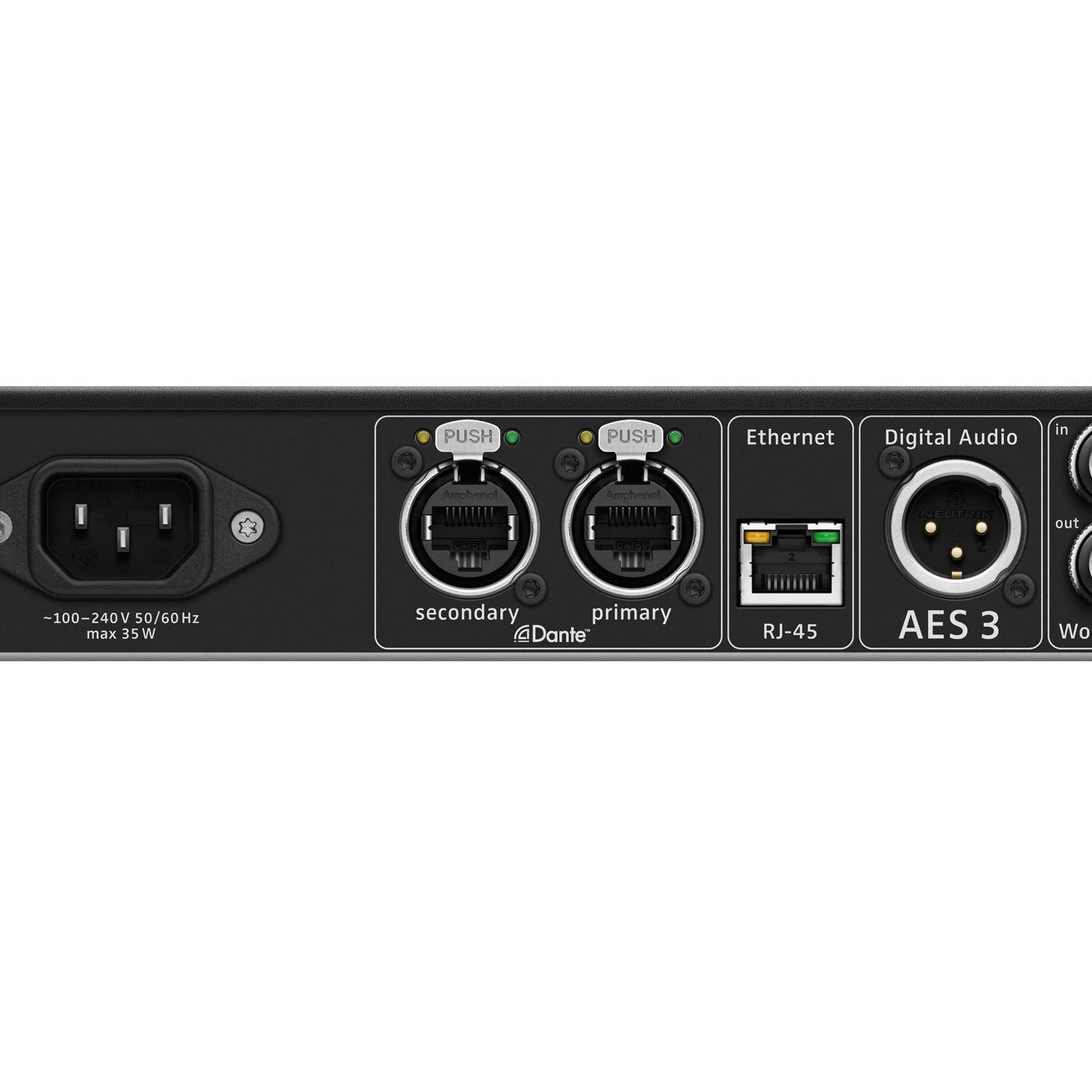
It switches between Long Range Mode, which uses Sennheiser's SeDAC codec for maximum range and audio quality, and Link Density Mode, which packs up to 5 channels into each MHz of bandwidth for very large channel counts. An integrated antenna splitter supports cascading up to 8 units without extra hardware, and dual OLED displays with a link quality indicator make monitoring straightforward from the rack. The standard EM 6000 outputs analog and AES-3; the EM 6000 Dante adds an Audinate Brooklyn II card with dual RJ-45 ports for direct Dante networking.
- Dimensions (H × W × D with mounting elements)44 × 483 × 373 mm
- Receiving channels2
- Analog audio outputsXLR-3 and 6.3 mm jack per channel (transformer balanced)
- Headphone output6.3 mm jack, 2 × 100 mW at 32 Ω
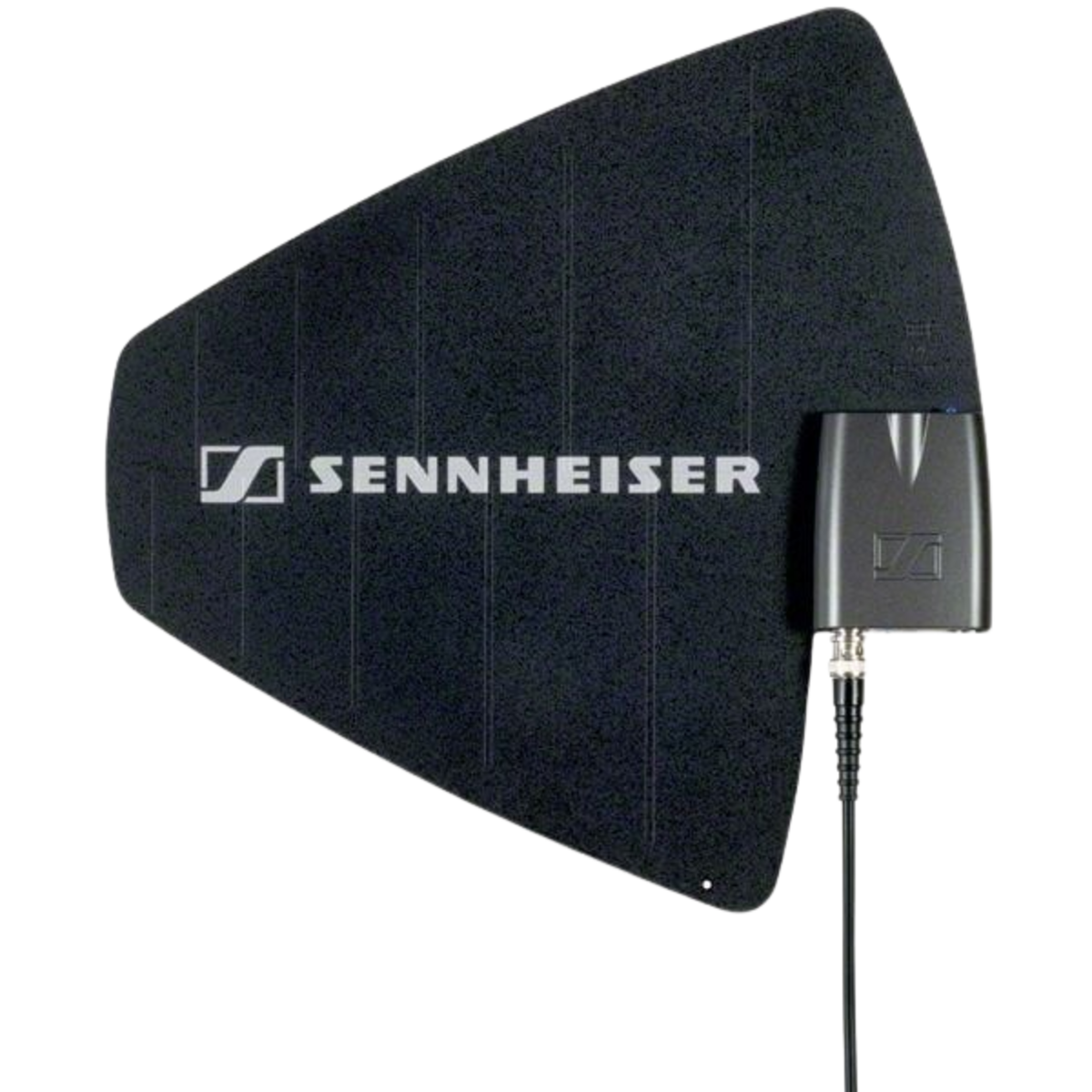
- Antenna inputs2 × BNC (50 Ω)
| Frequency Range | 470 to 714 MHz |
|---|---|
| Transmission Scheme | Digital modulation; Long Range Mode (LR) Min. frequency spacing for equidistant grid: 400 kHz; Link Density Mode (LD) Min. frequency spacing for equidistant grid: 200 kHz |
| Audio Codec | LR Mode: SeDAC (Sennheiser Digital Audio Codec); LD Mode: SePAC (Sennheiser Performance Audio Codec) |
| Dynamic Range | 111 dB (A) typ. |
| Encryption | AES 256 |
| Latency | Analog audio out: 3 ms (LR) / 3.2 ms (LD); Digital audio out (AES/EBU): 3 ms (LR) / 3.2 ms (LD) |
| Total Harmonic Distortion (THD) | < 0.03 % (at 1 kHz) |
| Temperature | Operation: −10 °C to +50 °C; Storage: −25 °C to +70 °C |
| Relative Air Humidity | Operation: max. 85 % at 40 °C (non-condensing); Storage: max. 90 % at 40 °C (non-condensing) |
| Dripping and Splashing Liquids | The product must not be exposed to dripping and splashing (IP2X) |
| Receiving Channels | 2 |
| Receiver Principle | Double superheterodyne |
| Diversity | True Bit Diversity |
| Sensitivity | −100 dBm typical |
| Image Rejection | > 100 dB typical |
| Blocking | > 80 dB typical |
| Audio Frequency Response | LR Mode: 30 Hz to 20 kHz (1.5 dB); LD Mode: 30 Hz to 14 kHz (1.5 dB) |
| Analog Audio Outputs | -3 and 6.3 mm jack per channel (transformer balanced), −10 dBu to +18 dBu in steps of 1 dB (2 kΩ) |
| Digital Audio Outputs | AES3-2003, XLR-3: 48 kHz, 96 kHz, 24 bit; Dante™, RJ-45 (only EM 6000 DANTE): 48 kHz, 96 kHz, 24 bit; Can be externally synchronized using WCLK loop-through with BNC sockets |
| Headphone Output | 6.3 mm jack, 2 × 100 mW at 32 Ω |
| Antenna Inputs | 2 × BNC (50 Ω) |
| Daisy Chain Outputs | 2 × BNC (50 Ω), 0 dB +/− 0.5 dB amplification relative to antenna inputs |
| Daisy-Chained Receivers (RF) | Max. 8 EM 6000 units |
| Booster Supply Voltage | 12 V DC, max. 200 mA each via antenna sockets, short circuit proof |
| Word Clock Input | BNC, 75 Ω |
| Word Clock Output | BNC, 75 Ω |
| Word Clock Sampling Rates | 48 kHz, 96 kHz |
| Network | IEEE 802.3-2002 (10/100 Mbit/s), shielded RJ-45 connection |
| Dante™ (only EM 6000 DANTE) | IEEE 802.3 (1000 Mbit/s), 2 × shielded RJ-45 connection |
| Power Supply | 100 to 240 V AC, 50/60 Hz |
| Power Consumption | Max. 35 W |
| Power Plug | 3-pin, protection class I as per IEC/EN 60320-1 |
| Dimensions (H × W × D with mounting elements) | 44 × 483 × 373 mm |
| Weight | Approx. 5.2 kg |
| Source | Spec sheet (PDF) on sennheiser.com |
- 3 x Mains cable (with EU, UK or US plug)
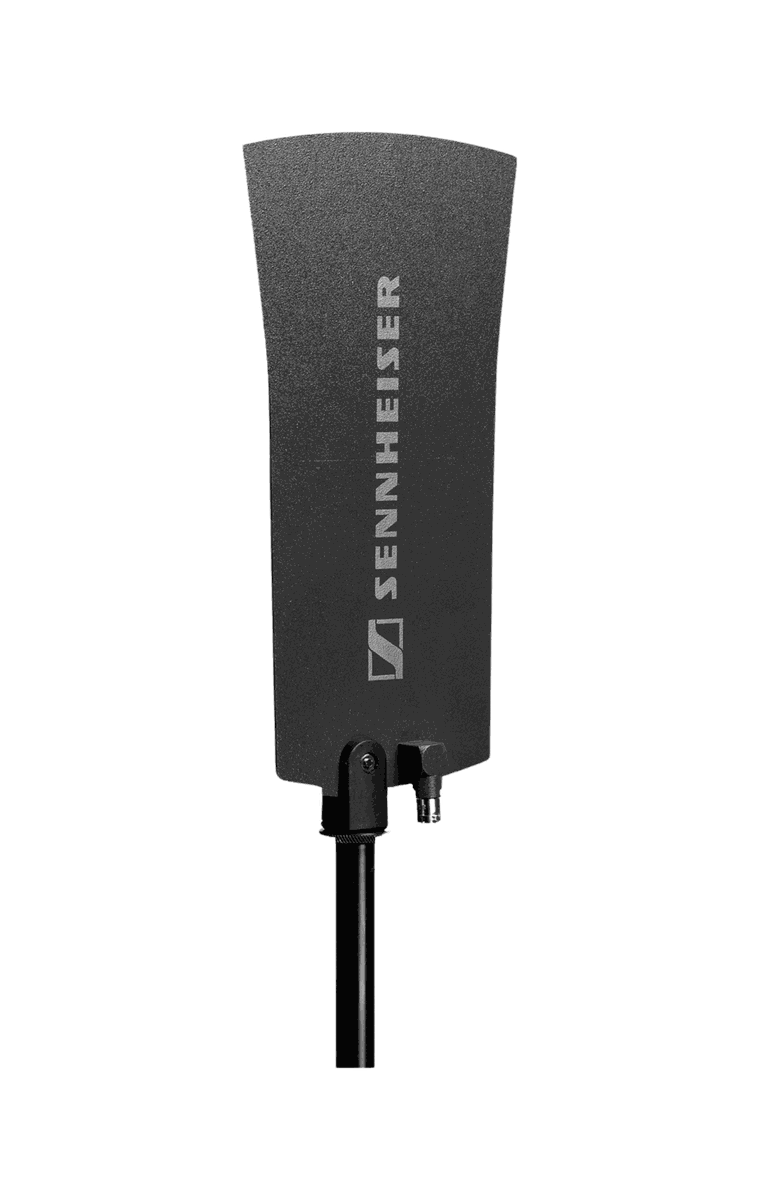
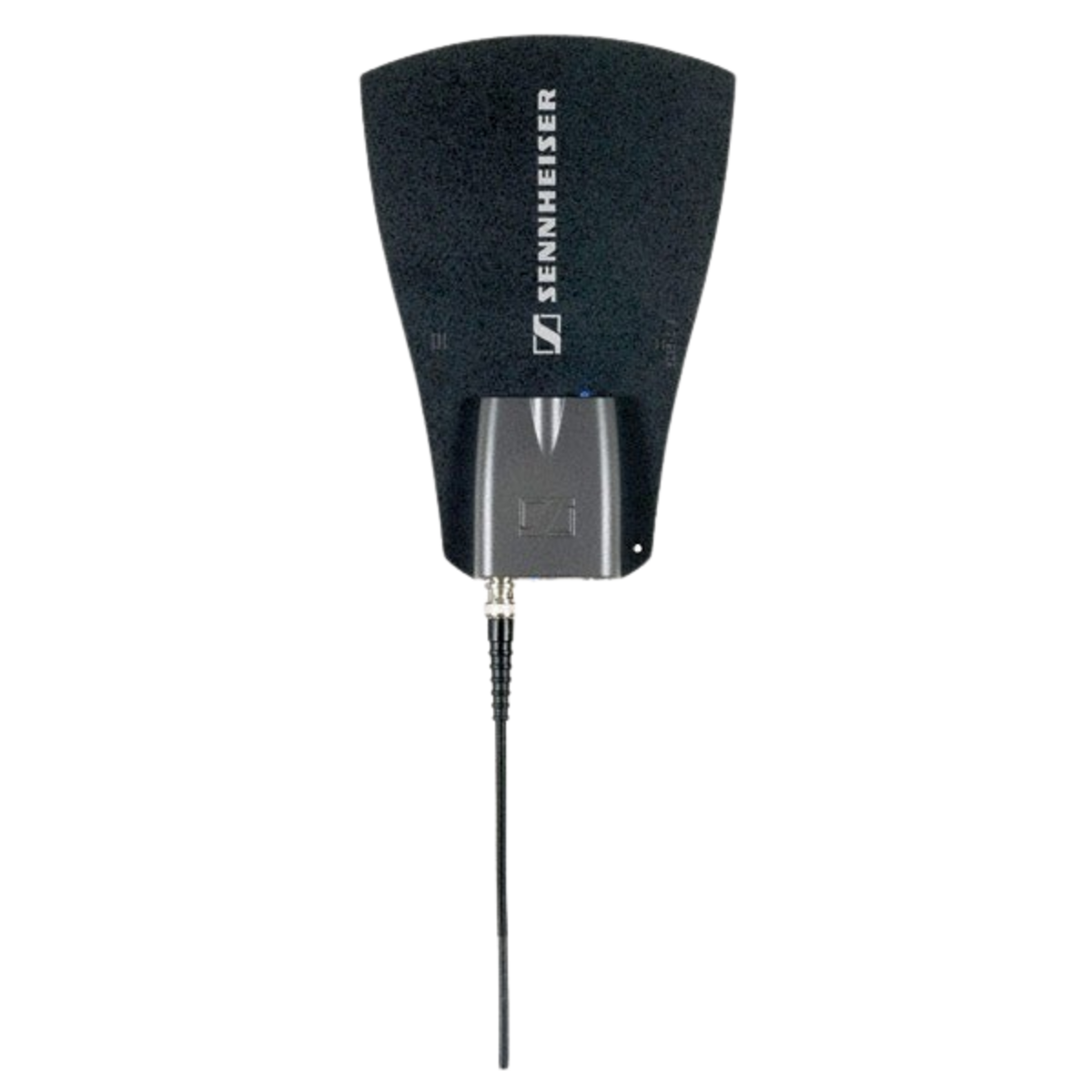
- 2 x Antennas